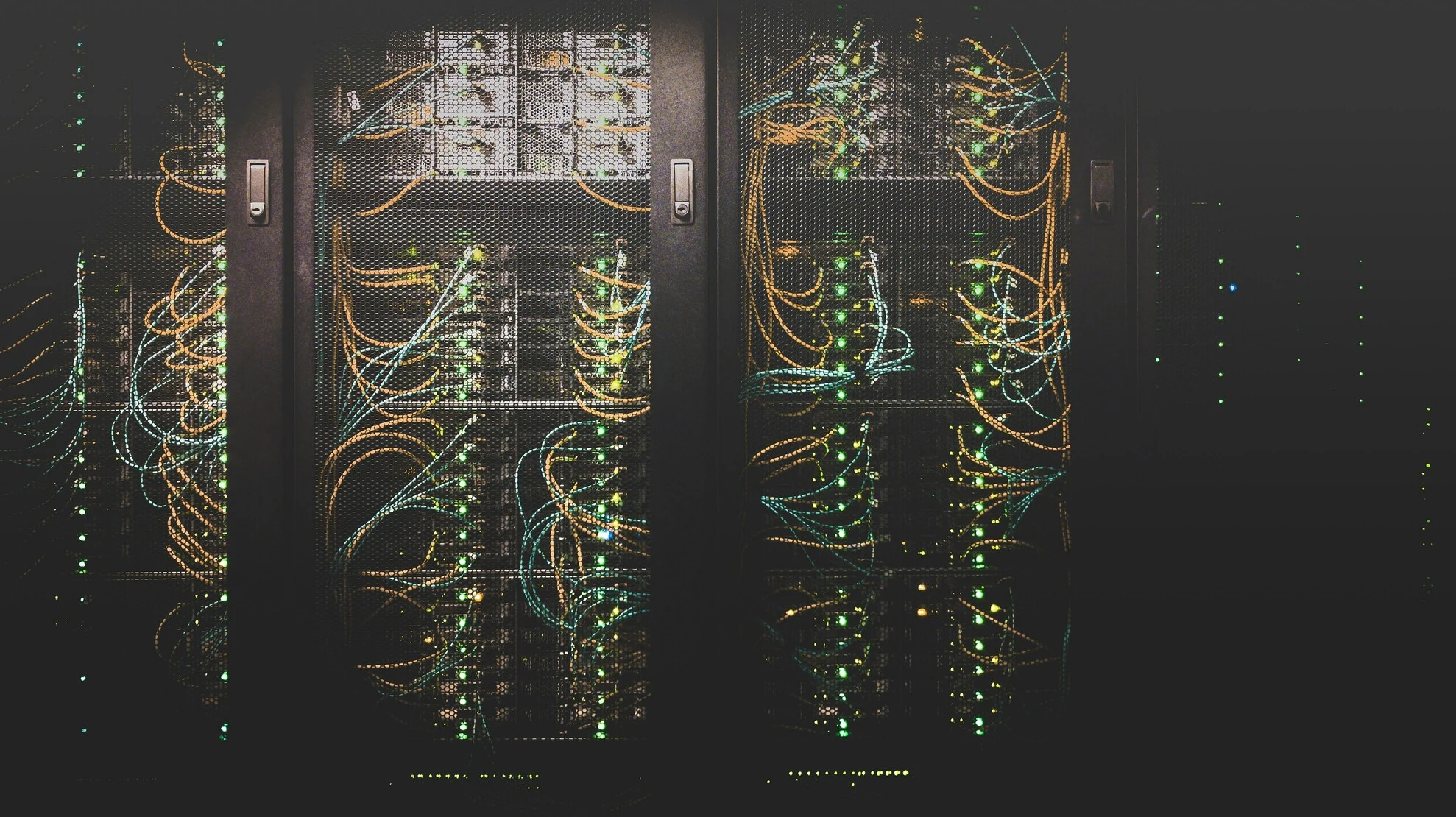
Opinion: AI’s Hidden Consumption — How Much Water and Energy Do Data Centers Devour?
Data centers supporting artificial intelligence development consume significant amounts of water and electricity. As AI models become more complex and the demand for computing services grows, the digital infrastructure’s impact on natural resources is becoming an increasingly important global topic.
According to an estimate by Rystad Energy, cited by TechXplore, direct water consumption for data center cooling could increase from approximately 222 billion liters in 2025 to 644 billion liters in 2030 under the analyzed scenario. This evolution would represent an almost threefold increase in five years.
The water footprint of data centers includes two main components: direct water consumption for cooling and indirect water consumption associated with electricity generation required to operate the equipment.
Direct Consumption: Cooling Systems
Unlike many traditional web hosting infrastructures, dedicated artificial intelligence servers can concentrate massive computing power into a small physical space. Modern graphics accelerators, such as the NVIDIA H100, H200, and B200, require significant amounts of electricity depending on the model and configuration.
In AI-dedicated racks, power density can reach tens of kilowatts and, in certain configurations, can exceed 100 kW. By comparison, traditional racks operate at much lower densities, although values differ considerably depending on the equipment used.
Nearly all electricity consumed by servers is converted into heat, which must be evacuated for the hardware to operate safely and maintain peak performance.
Technologies used to manage this heat include air cooling, liquid cooling, and evaporative cooling systems.
How Does Evaporative Cooling Work?
In an evaporative cooling system, water absorbs heat and dissipates it through evaporation. Depending on the setup, this process may involve cooling towers or other specialized equipment.
Evaporation allows for substantial heat transfer; however, it entails losing a portion of the water used, which must then be replenished by supplying additional water to the system.
Water source and quality are just as critical as the volume consumed. Some facilities rely on potable water drawn from municipal supply networks or subterranean aquifers. Others utilize reclaimed water treated from wastewater processes, provided it meets the system’s technical parameters.
Water must be properly treated to limit corrosion, mineral deposits, and microbiological growth. Consequently, not all water sources are suitable for every installation, and the choice of technology influences both water consumption and the strain placed on local water supplies.
The use of potable water in regions already facing water scarcity can trigger conflicting priorities between industrial infrastructure and community needs.
According to the International Energy Agency (IEA), the water footprint of data centers varies based on cooling technology, local climate conditions, and the source of electricity. In its analysis of U.S. data centers, the agency estimates that a 100 MW facility can have a total consumption of approximately two million liters of water per day, combining direct and indirect use.
Source: IEA — Energy and AI
Indirect Consumption: The Energy Footprint
Data centers must operate 24/7 to support digital services, including artificial intelligence applications. This continuous operation translates into massive electricity consumption.
Generating electricity can, in turn, require substantial water. In thermoelectric and nuclear power plants, water is heavily used for cooling and condensation. However, the exact water impact varies depending on the power generation technology, the cooling system employed, and the primary energy source.
Consequently, a data center’s indirect water consumption depends heavily on where it operates and how its electricity is generated.
This distinction is crucial, as two data centers with identical electricity demands can exhibit vastly different indirect water footprints.
How Much Energy Do Data Centers Consume?
Globally, data centers consumed an estimated 485 TWh of electricity in 2025, based on calculations from IEA data. This amount accounts for roughly 1.5% of total world electricity generation.
Of this total, approximately 155 TWh was attributed to AI-focused data centers, while the remaining ~330 TWh was associated with traditional digital services. In other words, AI represented about one-third of total data center energy consumption in 2025. These figures are estimates, and isolating AI consumption depends on the methodology used.
To put these numbers into perspective, one terawatt-hour (TWh) equals one billion kilowatt-hours (kWh). Therefore, 155 TWh means 155 billion kWh of electricity consumed in a single year. This energy powers tasks such as training AI models, generating user prompt responses, and executing complex AI workloads.
Power demand doesn’t stem solely from compute chips. Data centers also require network infrastructure, storage systems, power distribution hardware, and cooling plants. All of these components add to the total electricity draw.
The trend points sharply upward. In the base scenario published by the IEA in 2025, global data center electricity consumption was projected to reach roughly 945 TWh by 2030, more than double 2024 levels. This surge is driven primarily by the expansion of accelerated computing used for AI workloads, as well as rising demand for cloud computing and other digital services.
These figures require careful interpretation: total data center energy consumption is not synonymous with AI consumption alone, and future projections are estimates, not guaranteed outcomes. Hardware efficiency gains, model optimization, and the pace of new data center builds will shape actual consumption levels.
Sources: Our World in Data — How much energy do data centers and artificial intelligence use? and International Energy Agency — Energy and AI.
What Solutions Exist to Reduce Consumption?
Resource impact depends not only on compute volume, but also on how infrastructure is designed and operated.
Key measures that can help reduce water consumption include:
- Deploying more efficient cooling technologies;
- Utilizing reclaimed or recycled water where technically feasible;
- Adapting cooling systems to local climatic conditions;
- Siting data centers based on local water resource availability;
- Optimizing equipment power efficiency;
- Publishing transparent data on water and electricity consumption.
No single solution completely eliminates environmental impact. Efficiency gains depend on local climate conditions, technology choices, and available water and energy supplies.
Conclusion
AI does not operate in a vacuum or solely in the virtual realm. Supporting complex models and applications are physical data centers, compute accelerators, cooling systems, and power grids that consume real-world resources.
Beyond massive water and electricity consumption, the rapid expansion of AI infrastructure raises serious environmental questions. In the race for technological dominance, building ever-larger data centers places heavy stress on ecosystems, natural habitats, and nearby communities.
Land clearing for construction, habitat fragmentation, water table depletion, and landscape modification represent tangible risks that demand rigorous evaluation before project approvals. Added to this are noise pollution from industrial cooling systems, emissions associated with power generation, and environmental costs linked to manufacturing, transporting, and replacing hardware components.
At the same time, tech giants frame data centers as strategic investments capable of creating jobs, attracting capital, and driving economic growth. While these benefits can be real, they must be weighed against the full social and environmental cost. In public discourse, project narratives are frequently reinforced through high-profile PR campaigns, endorsements from public figures, and rhetoric centered on technological progress. For this reason, corporate claims must be evaluated using verifiable data rather than marketing spin.
An investment cannot be automatically judged beneficial for a community simply because it involves advanced tech and capital injection. We must know how many permanent jobs it creates, how much water it consumes, where its power originates, what emissions it generates, and who bears the cost of local infrastructure upgrades.
We can live without a specific chatbot or a portion of our digital services. We cannot, however, live without clean water, breathable air, and functional ecosystems. These are not obstacles to progress—they are the fundamental conditions that make life and long-term economic development possible.