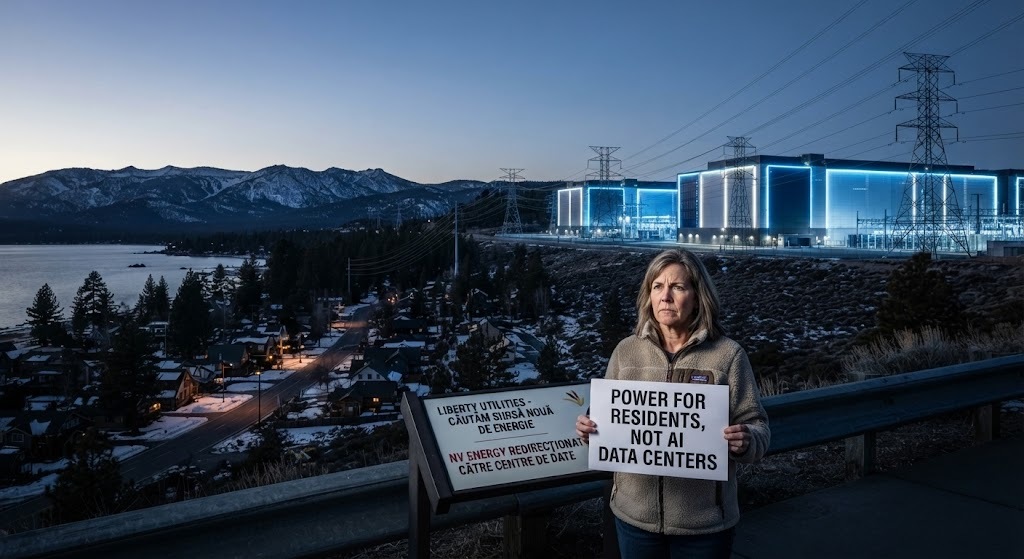
Energy Crisis in Lake Tahoe: Nearly 50,000 Residents Must Find a New Power Source as Energy Is Redirected to Data Centers
The Sierra Nevada tourist hub—home to ski resorts, lakeside casinos, and millions of annual visitors—is facing a major energy crisis. Roughly 49,000 residents in the Lake Tahoe region are left wondering where their electricity will come from after next ski season.
The Conflict Behind the Power Supply
NV Energy, the Nevada utility that has supplied the bulk of Lake Tahoe’s electricity for decades, informed Liberty Utilities—the small California company servicing the region—that it will stop providing power after May 2027. The reason behind this decision is that NV Energy needs the capacity to support the data centers powering the AI boom.
Northern Nevada has rapidly evolved into one of the fastest-growing data-center corridors in the country. Major technology companies like Google, Apple, and Microsoft have either built or planned facilities around the Tahoe-Reno Industrial Center. While NV Energy states that this transition was planned years in advance and that wholesale agreements were always intended to be temporary, independent experts and local community leaders warn that small ratepayers are left with immense uncertainty. Liberty generates only about 25% of its power from its own solar facilities, while the remaining 75% comes from NV Energy.
A Complex Jurisdictional Knot
What makes the crisis in Lake Tahoe particularly difficult to resolve is the lack of a single regulatory body overseeing the entire chain from power generation to customer bills.
-
Cross-State Borders: Liberty is an investor-owned utility based in California, and its customers pay rates approved by the California Public Utilities Commission (CPUC).
-
Infrastructure Dependence: Liberty’s physical grid sits entirely inside NV Energy’s balancing authority and relies on Nevada transmission lines.
-
Regulatory Gaps: Building a direct connection to California’s grid would require a transmission line over the Sierra mountains costing hundreds of millions of dollars. Meanwhile, California regulators cannot force NV Energy to continue selling wholesale power, creating a system where multiple jurisdictions apply and accountability is fragmented.
Impact on Local Ratepayers and Next Steps
This supply crunch comes on top of an ongoing affordability battle over rate increases driven by wildfire exposure, insurance premiums, and infrastructure spending.
Community advocates point out that permanent residents, low-income households, and essential workers risk becoming collateral damage in a system where surging industrial and visitor demands dictate infrastructure costs. Liberty plans to issue a formal request for proposals to secure replacement energy, but experts warn that a small customer base of 49,000 will have little leverage when competing against massive tech companies and utility giants in the broader Western energy market.